
 310-553-3055
 213-463-2100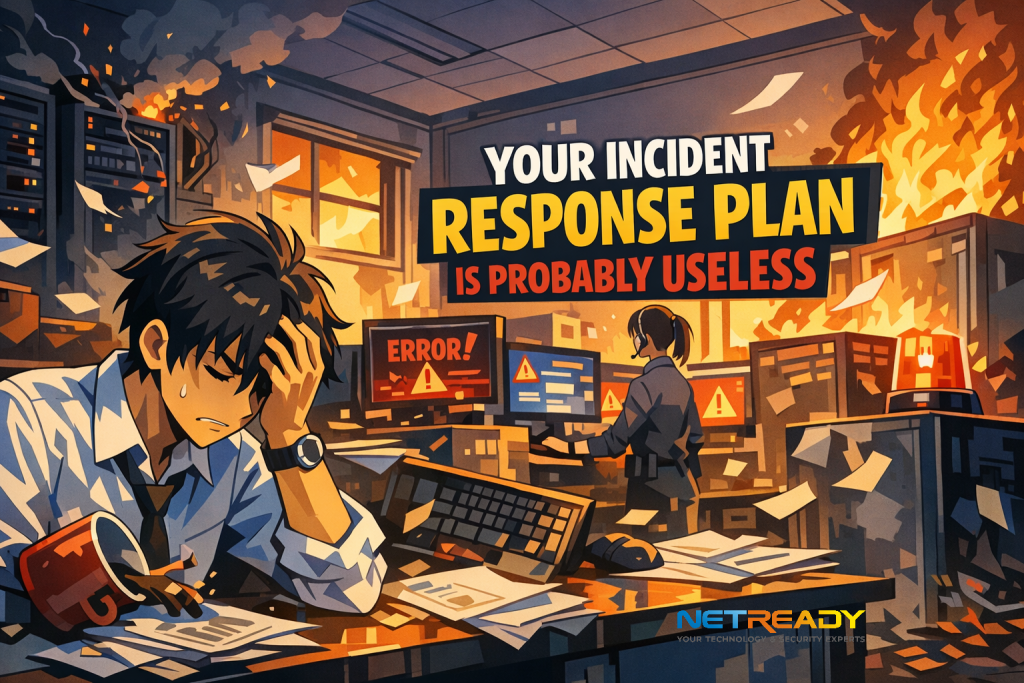
I've walked into organizations that had beautiful incident response plans. Binders. PDFs. SharePoint folders. Some had hired consultants, paid good money, and checked that box off their cybersecurity list.
Then something happened. A ransomware hit. A credential compromise. A data exfiltration they didn't catch for weeks.
And when the moment came, when the alarm was real and the clock was running, those plans were worthless.
Not because they were poorly written. Because they had never been used.
A Plan Is Not Preparedness
There's a dangerous assumption in business today: that documentation equals readiness.
It doesn't.
A plan sitting in a folder has never been pressure-tested. The people named in it may have left the company. The tools it references may have changed. The communication tree may have three outdated phone numbers and an executive who doesn't know they're the decision-maker during a breach.
I've been doing this for 25 years. I've responded to real incidents, and I've helped organizations prepare for them. The ones that hold up under fire aren't the ones with the prettiest plans. They're the ones who've rehearsed.
What Panic Actually Looks Like
When a real incident hits an unprepared organization, here's what I see:
People freeze. Not out of incompetence, out of shock. Nobody has mentally walked through this before. The playbook exists, but nobody's fluent in it.
Communication collapses. Who calls who? Does legal get looped in before or after IT? Does the CEO find out from the CISO or from a vendor? Nobody's sure, so everyone either over-communicates or goes silent.
The wrong decisions get made fast. Containment steps get skipped. Evidence gets destroyed before forensics can do their job. Systems get taken offline in the wrong order, extending downtime instead of limiting it.
The average cost of a data breach in the U.S. now exceeds $9 million. And while that number reflects larger enterprises, smaller organizations aren't insulated. Even for mid-sized and smaller businesses, the financial impact can easily reach six or seven figures when you factor in downtime, legal and compliance costs, and lost clients and reputational damage.
Every hour of confusion costs money.
The Boardroom Version vs. The Fire Version
Plans look good in boardrooms. They're logical. Linear. Organized.
Actual incidents are none of those things.
They happen at 2 a.m. They involve three simultaneous problems that your plan only accounted for one at a time. The person who owns Step 4 is on vacation. Your backup system is also compromised. The vendor you're supposed to call has a four-hour response SLA, and you needed them 90 minutes ago.
Testing a plan exposes all of this before it matters.
A tabletop exercise walks your leadership team through a realistic scenario, no real systems touched, but real decisions made. You'll find the gaps in your communication chain, the ambiguity in your escalation procedures, and the assumptions that don't hold under stress.
A simulated breach, or a full penetration test, goes further. It shows you what an attacker actually sees when they look at your environment, and whether your detection and response capabilities can catch it in time.
This isn't theoretical. It's the closest thing to fire drills that the cyber world offers. And just like fire drills, the point isn't the drill. It's what you fix afterward.
The Math Is Simple
Testing your incident response plan costs time and investment. So does a gym membership. So does a legal retainer. So does insurance.
What it buys you is the difference between a contained, managed incident and a full-scale crisis with regulatory exposure, reputational damage, and extended downtime.
I've never met a business leader who ran a tabletop exercise and said it wasn't worth it. I've met plenty who wished they'd done one before the real event.
The investment in testing is a fraction of the cost of failing publicly.
What Testing Actually Looks Like
At Netready, we work with organizations across financial services, construction, hospitality, and nonprofits to do exactly this, not just write the plan, but stress-test it.
That means tabletop exercises built around your industry's actual threat landscape. It means penetration testing that shows you where your real vulnerabilities are before an attacker finds them. It means sitting with your leadership team and walking through the decisions they'll have to make under pressure, so that when the moment comes, it isn't the first time.
We don't sell you a binder and walk away. We help you build a response capability that actually functions when you need it.
The Question That Should Keep You Up
If your organization experienced a significant breach tonight, how long would it take your team to even agree on what to do?
If the honest answer is "I'm not sure," that's the answer that matters.
Having a plan is the beginning. Testing it is the work.
The organizations that come through incidents intact aren't lucky. They're prepared. There's a difference.