 310-553-3055
 213-463-2100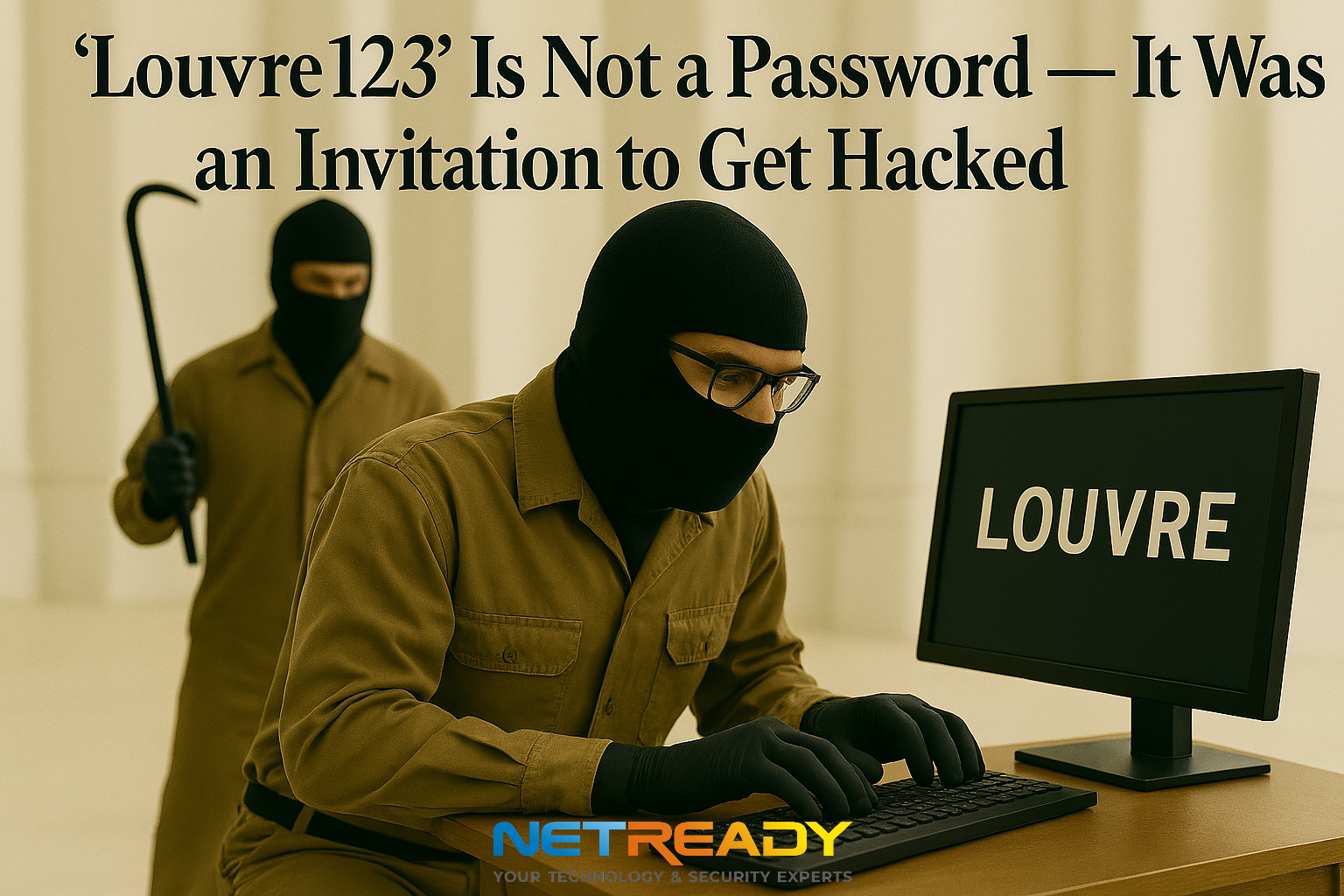
A world-renowned museum was robbed in broad daylight. Millions in artifacts stolen. But one of the most shocking findings wasn’t the heist itself, it was that one of the museum’s surveillance systems reportedly had the password “LOUVRE.”
Yes, the name of the museum was its password.
This isn’t just a cautionary tale for art institutions, it’s a wake-up call for any business leader who thinks weak passwords are a “small” risk. Whether you’re running a financial firm, construction company, medical office, hospitality brand, or nonprofit here in Southern California, the lesson is the same:
If you’re still relying on memory-based passwords and outdated access controls, you’re handing adversaries the keys.
What Really Went Wrong?
Reports revealed that prior to the 2025 heist, security audits had already flagged poor password practices and outdated systems. Those warnings were ignored, and the consequences were costly.
This isn’t unique to museums. At Netready, we regularly uncover similar issues during penetration tests and risk assessments:
- Passwords taped to monitors
- Shared login credentials
- Unused accounts still active
- Systems running on outdated software
If this sounds familiar, you’re not alone—but it’s time to fix it.
Three Lessons Business Leaders Need to Act On
1. Poor Passwords Are Still a Major Threat Vector
"LOUVRE" as a password might sound laughable—but how many businesses are still using “CompanyName123!” or “Welcome2024” as admin credentials?
Guessable passwords are still one of the top ways attackers gain entry. And when those passwords unlock client data, banking access, or sensitive internal tools, the damage adds up quickly.
This is exactly where a password manager comes in. Using a secure, encrypted password manager eliminates the need for staff to memorize or reuse passwords. It allows you to:
- Enforce strong, unique passwords for every system
- Audit who has access to what
- Rotate credentials automatically
- Eliminate credential sharing
At Netready, we help companies implement password managers that integrate seamlessly into daily workflows, so your team stays productive without compromising security.
2. Legacy Systems Equal Hidden Vulnerabilities
In the Louvre case, investigators discovered that old systems and poor documentation made it easy for attackers to exploit weaknesses.
We often find similar issues in businesses relying on legacy platforms, especially in construction and nonprofit sectors where systems don’t get updated as often. Old tech usually means:
- Weak default passwords
- Missing security patches
- Outdated encryption standards
Don’t let legacy tech become your weakest link.
3. Security Starts with Culture, Not Just Technology
Even the best password manager or security software won’t protect you if people ignore basic policies or share passwords on sticky notes.
That’s why security must be an ongoing conversation from executives to entry-level staff. Create a culture where people understand why these practices matter.
What Should You Do Now?
Here’s a simple 5-step framework we recommend to clients looking to improve authentication without overwhelming their team:
1. Roll Out a Password Manager Firm-Wide: Choose a reputable, enterprise-grade password manager and make it standard across your organization. At Netready, we often recommend Bitwarden for its strong security architecture, ease of use, and ability to scale from small teams to large enterprises. It enables your employees to generate, store, and autofill complex, unique passwords without relying on memory or sticky notes.
2. Implement Multi-Factor Authentication (MFA): MFA is a must. Even if someone steals a password, it won’t be enough without the second factor.
3. Audit Existing Password Practices: Check for weak or duplicate passwords, shared accounts, and inactive users. This is often the fastest way to reduce your risk exposure.
4. Plan to Retire or Secure Legacy Systems: If it’s out of support, it’s out of compliance. Secure it, segment it, or replace it.
5. Educate and Empower Your Team: Don’t just train people on what to do, help them understand why. Use real-world examples (like this museum breach) to drive home the message.
Final Thought
Cybersecurity doesn’t always require enterprise budgets or cutting-edge tech. Sometimes, it’s as simple as using a password manager and getting rid of “Louvre” level credentials.
The stakes are high. Your access controls are the front door to your business. Leave them weak, and you invite the wrong kind of attention.
At Netready, we help Southern California businesses harden their authentication systems, modernize outdated infrastructure, and build a culture of security without slowing down operations.
If your password policies haven’t changed since last year, let’s fix that—before someone else finds the cracks.
Zac Abdulkadir
CEO, Netready
Author of Exposed to Secure
Featured in Cyber Crime Investigations