 310-553-3055
 213-463-2100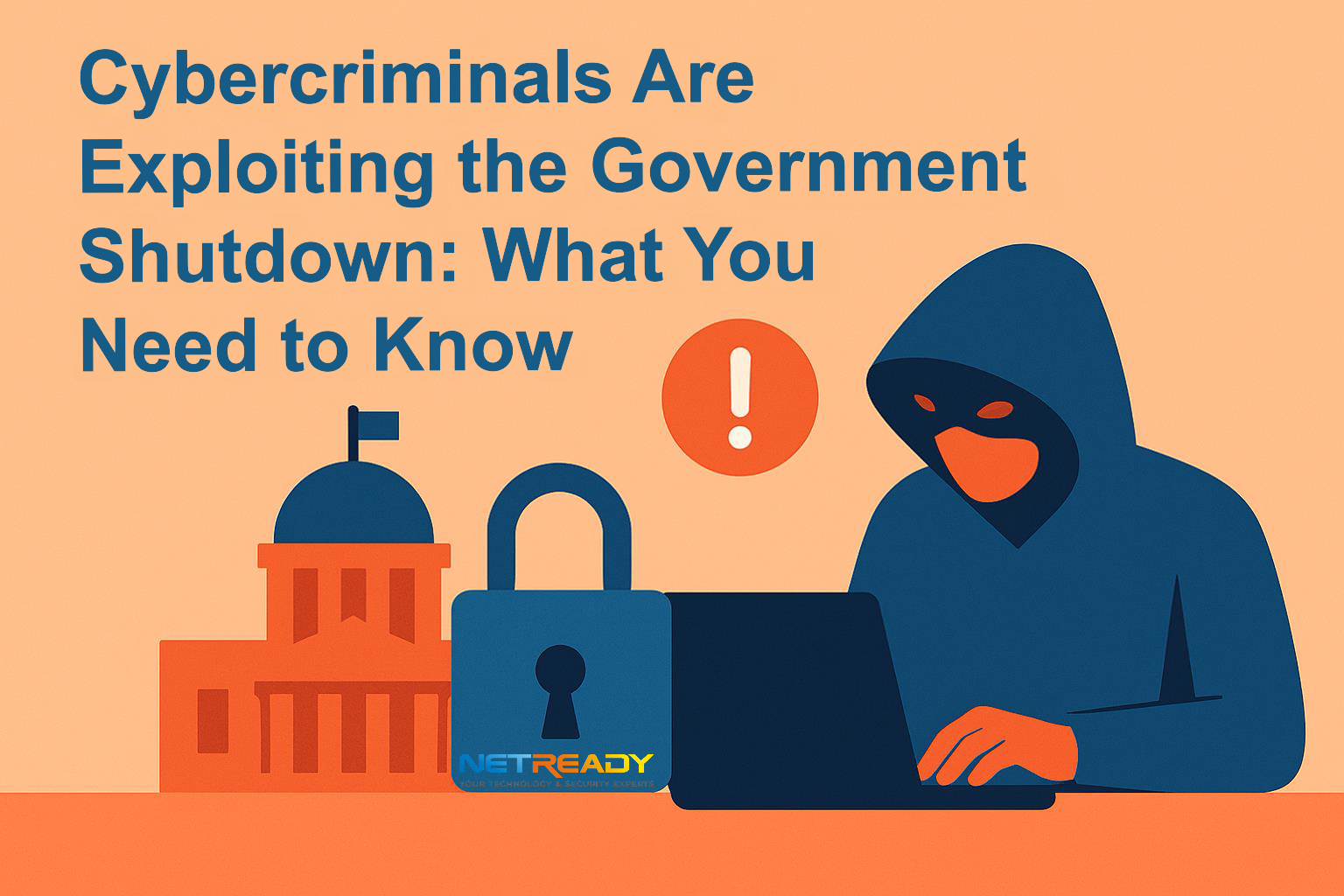
When the government shuts down, opportunistic cybercriminals do not miss a beat. In fact, they ramp up.
At Netready, we have seen it happen during every major government disruption. Threat actors take advantage of fear, confusion, and slowed government oversight to launch scams that look more legitimate than ever. And this year’s shutdown is no different.
Whether you are in financial services, nonprofit, construction, or healthcare, you need to be aware of the tactics now in play and how to protect your team.
The Perfect Storm for Scammers
When federal operations stall, several doors open for malicious actors:
- Paused or delayed regulatory responses: With the Cybersecurity and Infrastructure Security Agency and the Federal Trade Commission activity slowed, attackers have a longer runway before detection or takedown.
- Impersonation opportunities: Scammers pose as furloughed government employees or agencies requesting urgent information or payments.
- Funding-related scams: Targeting nonprofits and businesses waiting on grants, loans, or certifications.
Add in the rise of artificial intelligence-powered phishing and deepfakes, and we are looking at a surge of very convincing fraud attempts.
Common Government Shutdown Scam Tactics
Here is what we are seeing on the ground:
1. Fake Compliance Emails
Organizations are receiving emails that appear to be from regulators, like the Financial Industry Regulatory Authority or the Securities and Exchange Commission, warning of delayed audit deadlines or required verifications due to the shutdown. These are phishing emails designed to steal credentials.
2. Impersonation of Grant Agencies
Nonprofits and small to mid-sized businesses waiting on federal funding are being targeted by scammers offering expedited disbursement. All they need is your bank information. We have intercepted these attempts during client monitoring.
3. Vendor Payment Diversion
Scammers pose as government vendors claiming the shutdown is delaying automated billing. They send new wiring instructions. Finance departments under pressure are falling for it.
4. Malicious Attachments Disguised as Shutdown Memos
Threat actors are sending malware through documents titled "Internal Revenue Service Shutdown Impact Update" or "Small Business Administration Emergency Guidance." The branding looks real, but the payload is ransomware.
Why These Scams Are Working
Shutdown-related scams are effective because they:
- Feel timely and relevant
- Exploit fear or urgency
- Reference real-world events (making them more believable)
- Often mimic real government formats and terminology
With artificial intelligence-generated language and open-source intelligence tools, attackers can tailor these scams to your industry, your role, and even your recent activity.
How to Protect Your Organization
Here is what we are recommending to clients right now:
1. Send a Preemptive Awareness Memo
Inform your team that shutdown-themed scams are circulating. The best defense is knowing what to expect.
2. Pause and Verify Any Government Communications
Encourage staff to independently verify requests that appear to be from government agencies. Use official channels. Never trust contact information in the message itself.
3. Monitor for Domain Spoofing
Have your information technology team or managed service provider check for lookalike domains targeting your brand or your vendors. We have seen .gov and .org variations designed to bypass quick visual checks.
4. Review Payment Protocols
Reinforce that all vendor payment changes must go through a secondary verification step, such as a voice call or secure portal confirmation.
5. Deploy Contextual Threat Detection
Use behavior-based monitoring tools to spot anomalies like finance logins at unusual hours or outbound emails to unfamiliar domains.
Final Thoughts
The cyber threat landscape shifts with the headlines. Cybercriminals thrive on chaos, especially when it comes wrapped in .gov language.
If you are unsure whether your team could spot a shutdown-themed scam, now is the time to raise your defenses. It takes just one well-crafted email to trigger a costly breach, compliance issue, or operational halt.
At Netready, we help businesses and nonprofits adapt to evolving threats, from global trends to localized scams, with contextual defense strategies that actually work.
If you would like a quick review of your organization’s current email, impersonation, and payment protocols, let’s connect. We will help make sure disruption does not become disaster.
Zac Abdulkadir
CEO of Netready
With a career spanning over 25 years, Zac Abdulkadir is a recognized authority in cybersecurity and IT compliance, dedicated to securing businesses against evolving threats.