
 310-553-3055
 213-463-2100
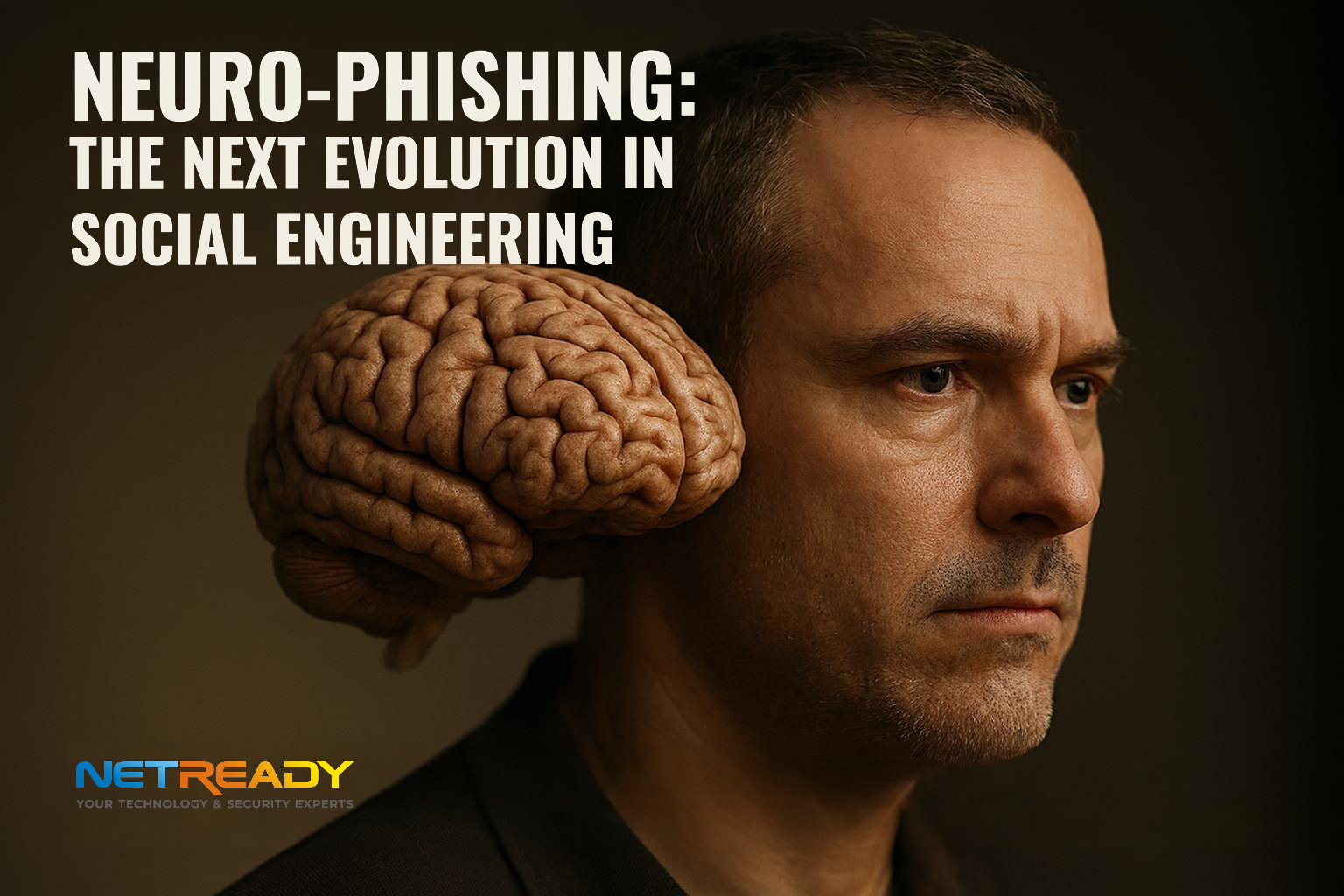
Over the last 25 years investigating cybercrime, one truth has consistently stood out: attackers rarely break in-they get invited in. And in 2025, they’re showing up in more convincing ways than ever before.
We’re now seeing the rise of neuro-phishing-an evolved form of social engineering that targets the way our brains process information under pressure. These attacks aren’t about links or attachments. They’re about psychology. And they’re already bypassing traditional defenses.
If your organization is relying on outdated phishing training or perimeter tools alone, you may already be vulnerable to these next-gen threats.
What Makes Neuro-Phishing Different?
Most of us are trained to spot the obvious red flags: urgent subject lines, unknown senders, typos, or sketchy links. But neuro-phishing isn’t built on panic. It’s built on precision, timing, and manipulation of how we think and feel in the moment.
Neuro-phishing takes things a step further. It introduces biometric and psychophysiological monitoring into the attack loop-making the experience interactive.
Here’s how attackers are evolving:
1. Cognitive Load Manipulation
Cybercriminals time their messages during peak stress periods-Monday mornings, quarter close, system migrations. Why? Because when we’re mentally overloaded, we switch to automatic decision-making. A request for wire approval or access credentials seems routine, and we click before we question.
2. Emotional Priming
These attacks don’t induce fear-they induce trust. A fake congratulatory message after a big win, or a "quick favor" from a peer after a team meeting. They leverage positive emotional states to bypass skepticism.
3. Authority Gradient Exploitation
Rather than spoofing the CEO (which most people have learned to second-guess), attackers now imitate middle managers, using internal language, recent meeting references, and organizational tone to pass as authentic.
4. Biometric Feedback in Real Time
Advanced neuro-phishing campaigns can now use data from browser extensions, compromised health apps, or eye-tracking tools to monitor micro-responses-like mouse hesitations, blink frequency, scroll behavior, and keyboard pacing. Some even incorporate EEG data to track cognitive load and stress.
With this feedback, attackers adjust messaging dynamically. If hesitation is detected, the language becomes more persuasive. If stress signals increase, the tone shifts to reassuring. They may change delivery channels-moving from email to voice or SMS-or insert snippets from actual internal conversations to increase legitimacy.
This isn’t passive baiting. It’s a cognitive feedback loop, where the human target becomes part of the system-responding to, and unknowingly feeding, the attack’s next move.
Why Traditional Defenses Aren’t Enough
Email filtering, antivirus tools, and SSO platforms are designed to catch known threats. But neuro-phishing uses legitimate accounts, non-malicious content, and socially engineered logic to appear safe.
A few examples we’ve encountered recently:
- Emails from compromised vendor accounts requesting routine data access
- Voice messages cloned using AI from trusted internal leaders
- Messages mimicking collaboration tools, customized to internal workflows
The systems don’t flag them. The users don’t question them. And that’s the problem.
A Practical Framework to Defend Against Neuro-Phishing
From years of pen testing, tabletop exercises, and security coaching, here’s what we know works:
1. Context-Aware Behavior Monitoring
Instead of relying only on static rules, deploy behavioral analytics that flag unusual communication patterns-like a finance manager sending requests late at night, or language that deviates from their norm.
2. Cognitive Resilience Training
Train employees to recognize when they’re most vulnerable-not just what phishing looks like. Stress, distractions, emotional highs or lows-all prime conditions for neuro-phishing. Build awareness around these states.
3. Structured Multi-Step Verification
Enforce clear, out-of-band verification for high-risk actions like wire transfers, data exports, or system access. Make it normal-even expected-for employees to pause and verify, regardless of who appears to be making the request.
4. Insider Threat Vigilance
Many neuro-phishing attempts lead to unintentional insider threats. Promote a culture where reporting strange behavior-no matter who it appears to come from-is part of the security playbook.
5. Ongoing Security Coaching
Annual trainings don’t cut it. Introduce regular, scenario-based coaching that evolves with new tactics. Think bite-sized, high-frequency, real-world simulations that reflect modern threats.
The Path Forward
Neuro-phishing isn’t a trend. It’s the next frontier of cognitive warfare in cybersecurity-and it’s already here. If your security program is still designed to stop yesterday’s threats, it’s time to reimagine your approach.
At Netready, we’ve spent decades helping organizations move from exposed to secure by focusing on the human element, not just the technical stack. We help clients integrate psychology-informed defenses, contextual threat detection, and executive-level awareness into their strategy.
The question isn’t whether your organization will be targeted. It’s whether your defenses are prepared for the way people are being manipulated in today’s threat landscape.
If you're ready to strengthen your frontline-your people-against advanced threats like neuro-phishing, let’s talk.
Zac Abdulkadir
CEO of Netready
With a career spanning over 25 years, Zac Abdulkadir is a recognized authority in cybersecurity and IT compliance, dedicated to securing businesses against evolving threats.